
Why Renovation Budgets Fail Before Construction Even Begins
Many people assume renovation budgets fall apart during construction. Unexpected discoveries. Changing material costs. Unforeseen conditions behind the walls.
Those things do happen. But in most projects, the real reason budgets unravel has very little to do with construction itself — or the surprises it can bring.
The breakdown usually happens much earlier. It happens during planning. Or more accurately, a lack of it.
Most projects begin with a simple question: How much will this cost?
At that stage, the scope is still evolving. Design decisions have not been finalized. Selections — which often drive a significant portion of the final cost — may exist only as inspiration photos or early ideas.
Because of that, many early project numbers are little more than placeholders.
Sometimes they are optimistic estimates meant to keep momentum moving forward. Other times they are quick square-foot calculations offered across a kitchen table.
But renovation work is rarely that simple.
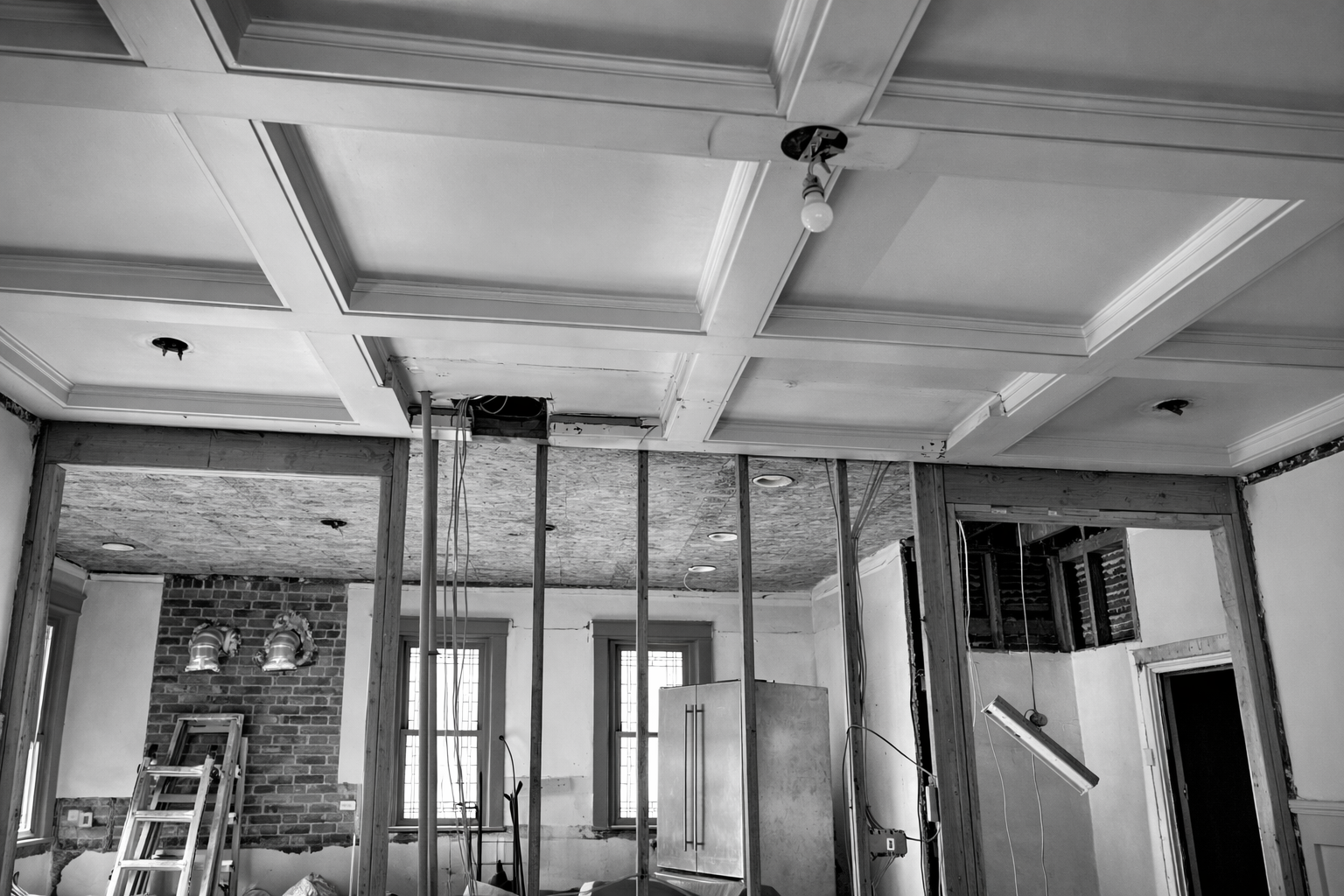
Existing homes carry decades of materials, decisions, and modifications behind their walls. Even experienced builders cannot fully understand the scope of a project without slowing down long enough to study the building itself.
This is why experienced builders learn to slow down at the beginning of a project.
Not to delay the work, but to understand the building well enough that early cost discussions are grounded in something real.
No builder can see through walls. But experience matters. The age of a home, its structure, its previous renovations, and the way it was originally built all provide important clues. Over time, patterns emerge.
Past projects become reference points. Costs are not guesses — they are informed estimates shaped by experience, data, and lessons learned from many renovations before.
This process will never eliminate every surprise. Renovation work always carries a degree of discovery.
But thoughtful feasibility work dramatically narrows the gap between expectation and reality.
As the design becomes clearer, materials are specified, and structural conditions are better understood, the numbers begin to stabilize.
To some clients, it can feel as though the project is suddenly “going over budget.”
In reality, the project is simply becoming better understood.
When planning is treated as a meaningful part of the process rather than a formality, renovation budgets stop behaving like moving targets.
Not because construction suddenly became cheaper.
But because the project was understood before it began.